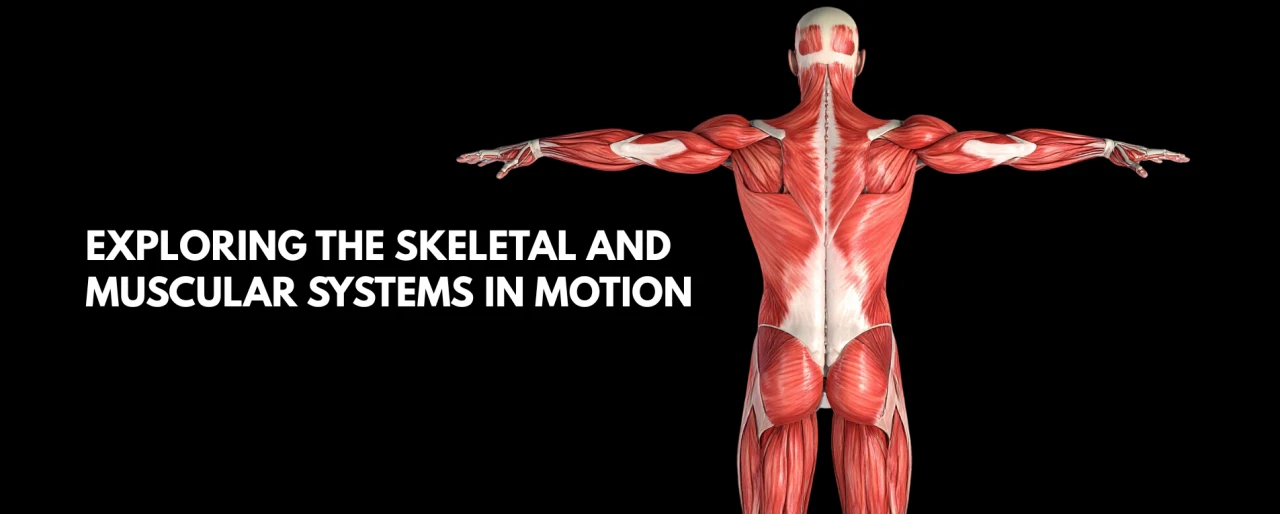
The human body is an extraordinary masterpiece of structure and function. At its core lie two systems that allow every form of movement — the skeletal and muscular systems. Together, they form the framework that supports our body, protects vital organs, and powers every step, stretch, and breath we take. Understanding how these systems work in harmony not only deepens our appreciation for anatomy but also enhances body awareness in yoga, dance, sports, and daily living.
The Science Behind the Skeletal and Muscular System
The skeletal system provides the rigid framework of bones that gives shape to the body, supports weight, and acts as an attachment point for muscles. The muscular system, composed of over 600 muscles, converts chemical energy into mechanical energy, generating the forces required for movement. Together, these two systems form what is known as the musculoskeletal system — a dynamic network of bones, muscles, tendons, and ligaments working seamlessly to maintain posture, enable motion, and absorb impact.
From a biomechanical perspective, every movement is a precise interaction of joints (where bones meet) and muscles (which contract or relax to produce motion). The balance between flexibility, stability, and strength determines how efficiently the body performs both simple and complex actions — from walking and lifting to advanced yoga postures.
The Yogic Perspective on Anatomy in Motion
Yoga offers a unique, experiential understanding of anatomy — one that blends science with self-awareness. When practicing asanas, we directly feel the engagement of the skeletal and muscular systems. Standing poses like Tadasana (Mountain Pose) build alignment and grounding through the skeleton, while flowing sequences like Vinyasa awaken muscular coordination and core stability.
At Pokhara Yoga School & Retreat Center, students enrolled in the 200 hour Yoga Teacher Training Nepal learn the functional anatomy of bones, muscles, and joints through both theory and movement. This approach helps practitioners understand not just how to perform poses, but why alignment and muscular engagement matter for balance, safety, and longevity in practice.
How the Systems Work Together
Muscles attach to bones via tendons, and their coordinated contractions create movement at the joints. For instance, when you bend your knee, the hamstrings contract while the quadriceps release. This delicate balance of contraction and relaxation, known as agonist–antagonist coordination, ensures smooth, controlled motion.
In yoga and mindful movement, awareness of this interplay enhances body control and reduces injury risk. Students in our Nepal Yoga Teacher Training programs explore how muscular engagement supports skeletal alignment — a key principle in advanced posture correction and injury prevention.
Improving Posture and Flexibility
- Strengthen key muscle groups: Building strong stabilizers — like the core and back extensors — supports spinal alignment.
- Enhance mobility: Gentle stretching keeps joints healthy and maintains full range of motion.
- Align with awareness: Use yoga asanas to sense the body’s structure and improve symmetry between left and right sides.
- Balance tension and relaxation: Combining effort with ease helps prevent muscular overuse and skeletal strain.
From Science to Experience
Scientific research confirms that consistent movement practices — such as yoga, Pilates, and mindful stretching — strengthen bones, tone muscles, and improve neuromuscular coordination. When we move with awareness, we’re not just exercising; we’re refining the body’s most intricate system of levers and pulleys.
Through anatomical study and practical exploration, students at Pokhara Yoga School & Retreat Center learn to embody these principles. The integration of modern anatomy and yogic wisdom builds both intellectual understanding and physical intelligence, empowering teachers and practitioners to guide others safely and effectively.
Final Thoughts
The skeletal and muscular systems are the foundation of every movement — from a gentle breath to an advanced yoga pose. By studying these systems, we not only improve our physical performance but also deepen our connection to the body as a living, intelligent organism. Whether you are exploring yoga anatomy as part of your 200 hour Yoga Teacher Training Nepal or seeking to understand your body more deeply, recognizing how the body moves from within can transform the way you live, practice, and teach.
Explore more at: Pokhara Yoga School & Retreat Center — where science meets spirituality through yoga education, mindfulness, and embodied learning in the heart of the Himalayas.