Introduction
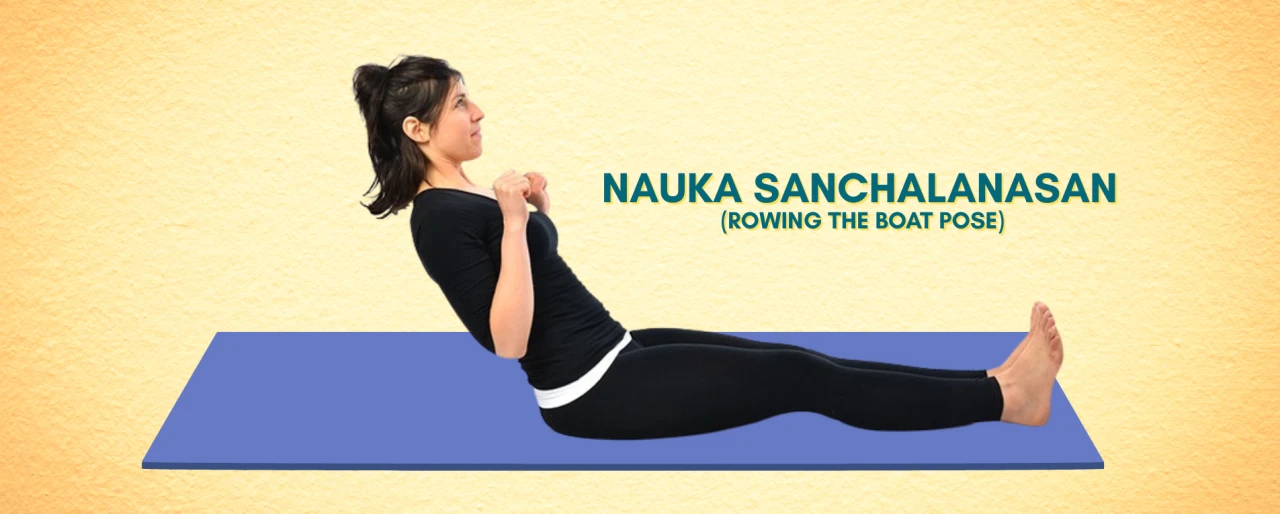
Nauka Sanchalanasana, also known as Rowing the Boat Pose, is a dynamic yoga practice commonly taught in traditional Hatha Yoga sessions. As its name suggests, this asana involves mimicking the rowing action of a boat. It helps build strength, flexibility, and coordination while engaging multiple muscle groups. The name comes from Sanskrit: “Nauka” (boat), “Sanchalana” (rowing or movement), and “Asana” (pose).
How to Perform Nauka Sanchalanasana: Step-by-Step Guide
Preparation
Sit on the floor with legs stretched out in front of you. Keep the back straight and hands resting on the thighs. Relax your shoulders and prepare with a few deep breaths.
Starting the Movement
Bring your legs slightly apart. Clasp your hands together as if holding oars. Keep the spine erect and chest open.
Rowing Action
Inhale and lean back slightly while stretching the arms forward. Exhale as you bend forward, moving your arms in a circular motion as if rowing a boat.
Breathing
Synchronize breath with movement: inhale while leaning back, exhale while bending forward.
Continue rowing for 10–20 cycles.
Release
Slowly bring the body back to an upright sitting position. Relax the arms and legs, and take a few deep breaths in a comfortable seated pose.
Modifications for All Levels
- For Beginners: Keep knees slightly bent to avoid strain on hamstrings and lower back.
- For Advanced Practitioners: Increase speed and duration of rowing or add resistance with light weights for intensity.
Top Benefits of Nauka Sanchalanasana (Rowing the Boat Pose)
- Strengthens abdominal, back, and thigh muscles.
- Improves flexibility of the spine and hip joints.
- Stimulates digestive organs and aids in digestion.
- Helps reduce abdominal fat through dynamic movement.
- Enhances blood circulation and overall body coordination.
- Releases stiffness in the lower back and hips.
- Promotes energy, stamina, and mental focus.
Common Mistakes and How to Avoid Them
- Rounding the back excessively instead of keeping the spine erect.
- Moving arms too quickly without coordinating breath.
- Locking the knees, which can strain the joints.
- Neglecting breath synchronization, reducing effectiveness.
- Overexerting by doing too many cycles without rest.
Risks and Precautions
- Avoid if suffering from severe back pain, hernia, or recent abdominal surgery.
- Not suitable for people with heart problems or high blood pressure.
- Pregnant women should avoid this pose due to abdominal pressure.
- Always practice under the guidance of a certified yoga instructor if new to this asana.
Also check : Nepal Yoga Teacher Training nepal