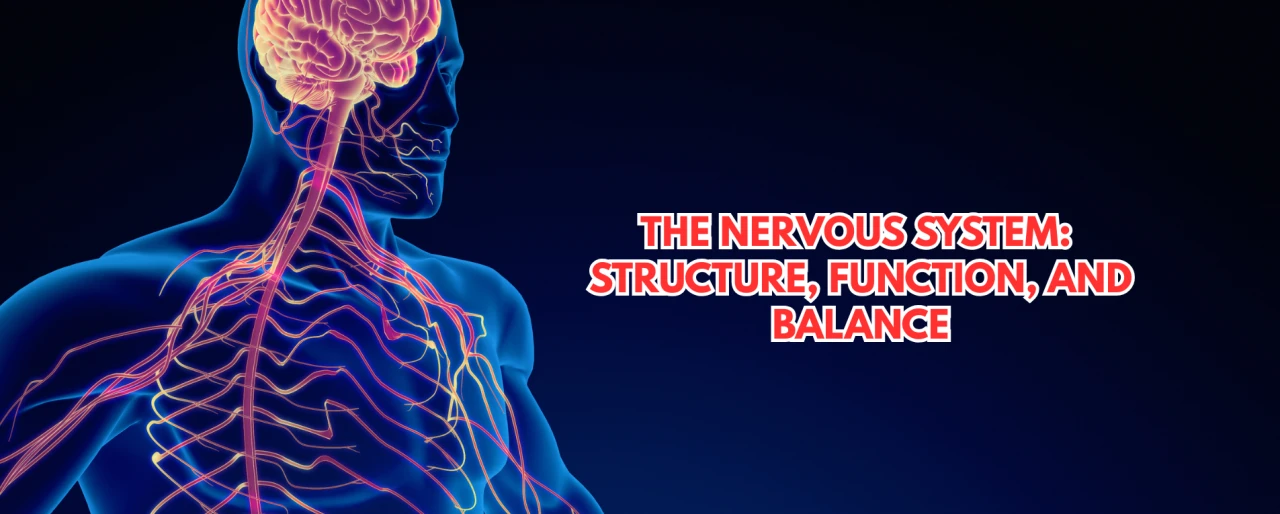
The human nervous system is the body’s communication and control network. It allows you to sense the world, think, move, and keep internal processes in balance. This article explains the nervous system’s structure and function and offers practical tips to support healthy balance.
Structure of the Nervous System
The nervous system has two main parts: the central nervous system and the peripheral nervous system. Together they coordinate signals from the body and the environment to guide actions and maintain stability.
Central Nervous System (CNS)
The CNS includes the brain and spinal cord. The brain interprets incoming information, forms decisions, and sends commands. The spinal cord relays signals between the brain and body and also handles quick reflex responses.
Peripheral Nervous System (PNS)
The PNS consists of nerves that branch throughout the body. It is divided into the somatic system, which controls voluntary movement, and the autonomic system, which regulates involuntary functions such as heart rate and digestion.
Autonomic Nervous System (ANS)
The ANS has two complementary branches. The sympathetic branch prepares the body for action, while the parasympathetic branch supports rest, recovery, and repair. Healthy function requires flexible shifting between these states.
Cells of the Nervous System
Neurons transmit electrical and chemical signals, forming circuits that underlie sensation, thought, and movement. Glial cells support neurons by maintaining the environment, insulating pathways, and helping with repair.
Function of the Nervous System
The nervous system performs three core roles: sensation, integration, and response. These roles allow the body to gather information, make sense of it, and act effectively.
Sensation
Sensory receptors detect touch, temperature, sound, light, smell, taste, and internal signals such as blood pressure and hunger. These signals travel to the brain for processing.
Integration
The brain and spinal cord combine sensory input with memory, emotion, and context to create meaning. This step shapes perception, plans actions, and guides learning.
Response
Commands travel from the CNS to muscles and organs. Voluntary responses create movement, while involuntary responses regulate essential functions like breathing, heartbeat, and digestion.
Balance in the Nervous System
Balance means the nervous system can adapt smoothly between activity and recovery, and coordinate posture and movement. Two domains are important: autonomic balance and sensorimotor balance.
Autonomic Balance
Chronic stress can keep the sympathetic branch dominant, leading to fatigue, poor sleep, and digestive issues. Supporting parasympathetic activity helps restore calm, recovery, and resilience.
Sensorimotor Balance
Vision, inner ear signals, and body position senses feed the brain to maintain posture and steady movement. Well-tuned coordination reduces injury risk and improves everyday performance.
How to Support a Healthy Nervous System
Prioritize consistent, high-quality sleep to aid repair and memory. Practice stress management such as deep breathing or mindfulness to encourage recovery. Move regularly to support brain and body circuits. Eat a balanced diet with adequate hydration to fuel cells. Learn new skills to stimulate plasticity, and maintain good posture and gentle mobility to reinforce coordination.
How to Support a Healthy Nervous System
Prioritize consistent, high-quality sleep to aid repair and memory. Practice stress management such as deep breathing, meditation, or yoga to encourage recovery. Joining a Yoga Teacher Training in Nepal can help you understand mindfulness, breath control, and posture techniques that naturally balance the nervous system.
Conclusion
The nervous system underpins how you think, feel, move, and recover. By understanding its structure and functions and by nurturing balance through sleep, stress control, movement, nutrition, and learning, you can support long-term health and everyday performance.
Also check : Exploring the Skeletal & Muscular System in Motion